🌏INTRODUCTION
India is a democratic market economy, which has a population equal to the total population of all 78 western democracies (~1.4 billion). With 28 States & 8 Union Territories, 23 official languages and 456 living languages, it is far more diverse than the European Union (EU) with 28 countries and 24 official languages. In contrast to these countries which are upper middle income or high-income countries, India is still a lower middle-income country. India’s population has recently overtaken China’s; The combination of large population and relatively lower middle income, makes India the fourth largest economy in the World.
Section 2 – lays out a vision of equality which is the foundation of fast inclusive growth in a free, open, plural democracy.
* Section 3 – examines the demographic, de- carbonisation,and de- globalisation trend.
- Section 4- takes stoke of the macro-economics (including demand pattern) & structural features of the Indian economy, and envision its potential evolution over the next few decades.
- Section 5 – Examine the critical issues related it actualisation of the “demographic dividend” and creation of a knowledge economy, and also analysis the issues of education system and employment.
- Section 6 – Focused on Governance and its critical role in furthering public welfare. It starts with a data based analysis of poverty and distribution followed by health & public health issues. This section proposes a digitisation of the laws,rules ,procedures and decisions of the government, to prepare the ground for use of AI expert system to transform governance system,procedures and routine decisions.
- Section 7 – This section delves into Hybrid, digital- physical (Phygital), system that are critical to translating the vision into the reality.
- Section 8 – This section belongs to green economy and India’s holistic approach to carbon control.
- Section 9 – It provides a geopolitics Vision for India in the World of 2047
2. Equality of opportunity
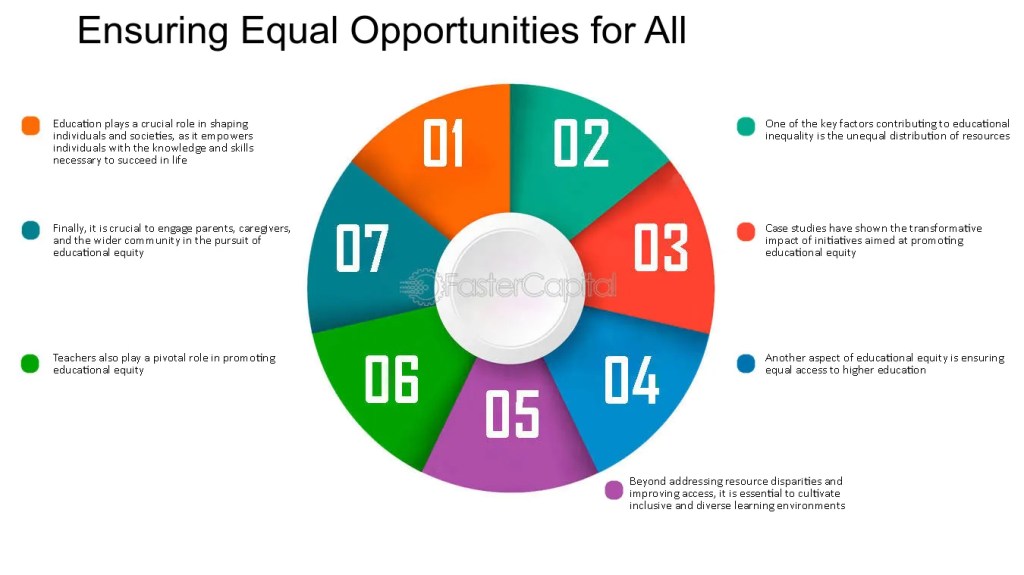
India’s constitution is based on the philosophy that all citizens are equal under the constitution, under the laws enacted under its umbrella and the governance and administrative institutions which implement these laws. The original vision as best explained by Ambedkar, was that the India would become reasonably equal in a few decades. Failure to achieve these hopes has made it necessary extend constitutional measures decade after decade. Further the administrative reality of how the constitution and laws are implemented remains too far from the vision. We envision an India in 2050 in which the original vision of human equality embodied in the fundamental structure of the constitution is restored, the laws reflect the fundamental right to equality and the governance institutions are reformed to reduce the gap between the laws and their implementation. We envision that the jungle of economic laws,
rules, regulations and controls, introduced in the first three decades of independence, will become a distant memory.
 Mrpatrakar